Primorsko, Bulgaria: the family beach town south of Sozopol (2026)
Updated August 15, 2026 · 8 min read
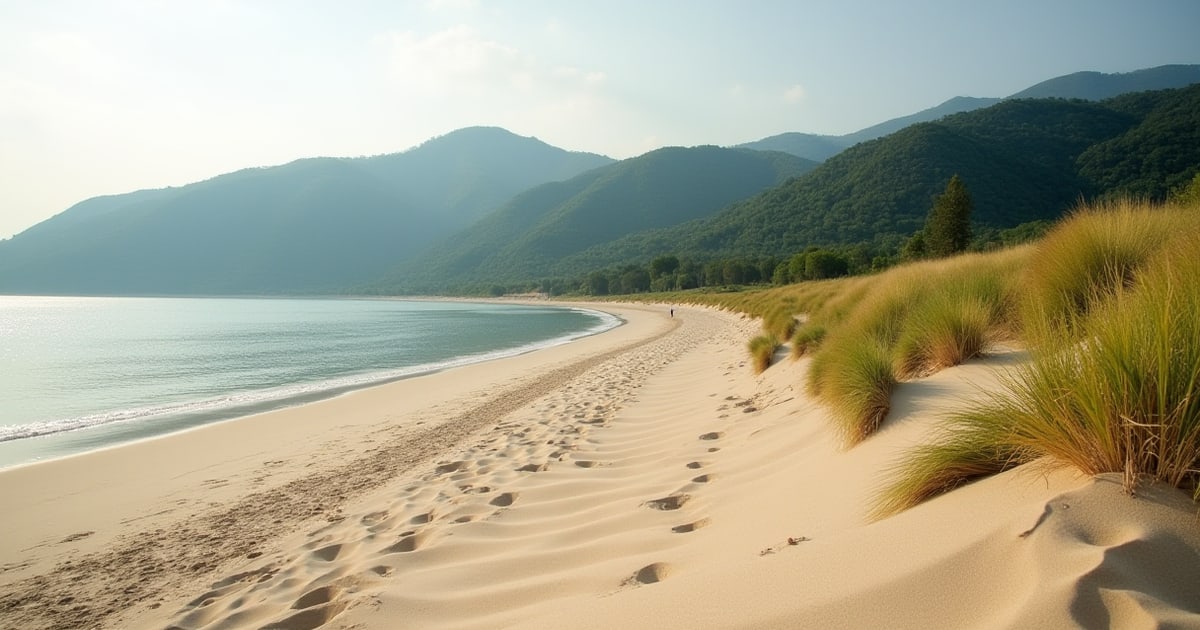
Primorsko is a small Black Sea resort of roughly 3,000–4,000 permanent residents that swells to many times that in July and August, built around two wide sandy beaches and a reputation — going back to socialist-era youth camps — as the place Bulgarian families send their kids for the summer. If you want a quiet, walkable seaside base with real sand and shallow water, and you're comfortable with a town that half-shuts down from October to May, it's worth a look. If you want year-round expat community, restaurants open in January, or a short commute to an office job, skip it — that's Burgas or Sozopol territory, not this one.
What it's like
Primorsko sits about 55–60 km south of Burgas on a small headland between two bays: North Beach (Stamopolu) and South Beach (near Perla/Diavolski Bay), together forming what locals bill as the longest continuous stretch of sand on the Bulgarian coast. The town itself is compact — a grid of a few dozen streets, a small harbor, a central pedestrian strip of grills, ice cream stands and souvenir shops, and holiday complexes ringing the edges. There's no old town to speak of and no historic architecture; this is a 20th-century resort, not a heritage site.
Its identity is tied to that history. Under communism, the nearby International Youth Centre (built for the "Georgi Dimitrov" youth resort) and a cluster of pioneer and school camps made Primorsko and neighboring Kiten the default summer destination for Bulgarian schoolchildren for decades. Some of that camp infrastructure still operates today, repurposed as hotels and youth sports complexes, and the town's summer crowd still skews heavily toward Bulgarian and regional (Serbian, Czech, Slovak, Romanian) families rather than Western European retirees or remote workers. Compared to smaller towns along the coast, Primorsko is louder in August and quieter in January than almost anywhere else on this list.
The real draw for anyone considering property here is what's just outside town: the Ropotamo Nature Reserve, a protected river and forest system on the Sozopol–Primorsko border dating to 1940, and the Arkutino marsh a few kilometers south, home to a shrinking but still-visited population of protected white water lilies, reachable by a boardwalk. Boat trips up the Ropotamo river are one of the most consistently recommended day trips on this whole stretch of coast, and having that on your doorstep rather than a two-hour drive away is a genuine, distinctive selling point for Primorsko over most other resort towns.
The season (honest winter reality)
Be clear-eyed about this: Primorsko is a summer resort, full stop. From roughly mid-June to mid-September the town is genuinely busy — beaches are staffed, restaurants and bars along the central strip operate full hours, and there's a real, if transient, social scene. Outside that window the picture changes fast. By late October most seasonal hotels, beach bars and a large share of restaurants close for the winter, some not reopening until May. Public transport frequency drops. The town's actual year-round population is a fraction of its summer one — permanent residents are estimated around 3,000–4,000, versus a summer influx that multiplies the daytime population many times over.
Winters themselves are mild by Bulgarian standards (the Black Sea moderates temperatures, so it's not the harsh continental cold you'd get inland), but "mild" doesn't mean "lively." If you're picturing café culture and open restaurants in February, recalibrate: you'll be doing most shopping and socializing in Burgas or Sozopol, and even Sozopol keeps noticeably more open through winter than Primorsko does. This matters enormously for anyone planning to live here year-round rather than just own a summer place — factor it into any cost of living planning, since a "cheap" summer town can feel isolating and service-poor for seven months of the year.
Property: buying and renting (real 2026 EUR numbers)
Bulgaria transacts entirely in euro now, and Primorsko's market is squarely a holiday-property market — most buyers are purchasing a summer apartment or investment rental, not a primary residence, and pricing reflects that.
| Property type | Typical 2026 range (EUR/m²) | Notes |
|---|---|---|
| Studio/1-bed, older complex, no sea view | ~€600–900/m² | Older stock, higher service charges relative to size |
| 1–2 bed, standard holiday complex | ~€1,000–1,450/m² | Most common segment; new-build studios start around €1,070/m² |
| Near-beach or newer complex (e.g. near Aquaplanet) | ~€1,200–1,450/m² | Closer to the water, better finish |
| Premium/sea-view or house | ~€1,700–2,800/m² | Wide range; standalone houses priced individually, not just per m² |
For scale, a 45 m² one-bed apartment in a mid-range complex might run roughly €35,000–55,000; a sea-view two-bed in a newer development can clear €100,000. These are listing-price ranges pulled from current Bulgarian property portals, not appraisals — get a local agent and a lawyer before committing, and read up on buying property in Bulgaria as a foreigner first, since land ownership rules for non-EU buyers differ from apartment ownership rules.
Long-term (year-round) rentals are a thin market here — Primorsko's rental inventory is overwhelmingly geared toward short-term summer lets (nightly/weekly), not 12-month leases, because that's where the money is for owners. If you do find a long-term listing, expect a modest studio or one-bed to land somewhere in the €250–400/month range off-season, but treat that as a rough indication rather than a quoted market rate — you'll likely be negotiating directly with an owner rather than picking from a deep listings pool. Compare that against renting long-term in Burgas or Sozopol, where the market is deeper and more predictable.
Everyday practicalities
In season, Primorsko has what you'd expect of a resort of its size: a supermarket or two, a pharmacy, a medical center/first-aid point, ATMs, a post office, and enough restaurants and cafés to not think about food. A local elementary school serves the permanent population, but options thin out fast for anything beyond that — families with older kids typically look at Burgas for secondary schooling.
Out of season, plan for reduced hours and reduced choice: fewer pharmacy hours, a smaller subset of shops open, and real errands (bigger supermarkets, specialists, non-emergency healthcare, bank branches with full services) meaning a drive to Burgas. This is normal for small Bulgarian coastal towns, but it's worth saying plainly rather than glossing over — Primorsko is not a place to be without a car for the winter months.
Getting there and around
Burgas Airport (BOJ) is the relevant gateway, roughly 55–60 km north of Primorsko — figure about 55–65 minutes by taxi or private transfer, longer (1.5–2.5 hours with connections) by public bus. Burgas Airport has direct seasonal and year-round links to a good spread of European cities, though frequency drops sharply outside summer, which loops back to the seasonality point above. Sozopol is a short 15–20 minute drive north, and Kiten is even closer, just a few kilometers south — both make easy day trips or nearby-town comparisons if you're house-hunting on this stretch of coast (see the future Sozopol guide and Kiten guide).
Bulgaria's full Schengen membership since 2025 means no border stops driving in from Romania or onward into the rest of the Schengen area — relevant if you're relocating with a car rather than flying. If you're bringing or buying a vehicle, see the guides on driving in Bulgaria and buying a car in Bulgaria; within Primorsko itself everything is walkable, but a car is close to essential for winter life, work commutes to Burgas, or reaching Ropotamo and Arkutino independently of a tour boat.
Who it suits (verdict by persona)
- Families wanting a summer base: strong fit. Sandy, shallow, lifeguarded beaches, kid-oriented town rhythm, camp and activity infrastructure baked into the town's history.
- Retirees seeking year-round coastal living: weak fit. The winter shutdown is real; Sozopol or Burgas will feel far less isolating for 12-month living.
- Remote workers: weak-to-moderate fit only in shoulder season. Summer is too noisy/crowded for focus, winter is too quiet for services and social life; connectivity is fine but the town isn't built around that rhythm.
- Property investors chasing rental yield: moderate fit. Short-term summer letting is the town's actual business model, so a well-located apartment can perform, but don't count on a deep long-term-tenant market to fall back on off-season.
- Nature-focused buyers: strong fit, specifically because of Ropotamo and Arkutino on the doorstep — if that's the draw, Primorsko delivers something the busier resorts further north don't.
Before acting on any of this, it's worth running the numbers through the cost of living calculator and, if you're weighing a move rather than just a summer home, the residency wizard to see which residence permit route actually applies to your situation.
FAQ
Is Primorsko a good place to live year-round, or only for summer?
Honestly, mostly for summer. The town has a genuine permanent population and works fine for basic year-round living if you have a car and don't mind driving to Burgas for anything beyond essentials, but most restaurants, seasonal shops and much of the social scene shut down from roughly October to May.
How much does an apartment cost in Primorsko?
Expect roughly €600–900/m² for older, basic stock and €1,000–1,450/m² for standard modern holiday-complex apartments, with sea-view or premium units running €1,700–2,800/m². A typical 45 m² one-bed lands somewhere around €35,000–55,000 depending on condition and location.
Is there a long-term rental market in Primorsko?
It's thin. Most rental inventory is aimed at short-term summer visitors rather than 12-month tenants, so long-term listings are scarcer and less standardized than in Burgas or Sozopol. If you find one, budget roughly €250–400/month for a modest off-season studio or one-bed, treated as an estimate rather than a quoted rate.
How far is Primorsko from Burgas Airport?
About 55–60 km, roughly 55–65 minutes by taxi or private transfer. Public bus takes longer, often 1.5–2.5 hours depending on connections, and runs less frequently outside the summer season.
What's the Ropotamo Nature Reserve, and is it worth visiting?
It's a protected river, forest and marsh system on the Sozopol–Primorsko border, protected since 1940, best known for boat trips up the Ropotamo river and the nearby Arkutino marsh with its water lilies. It's one of the most consistently recommended day trips on the southern Bulgarian coast and a genuine reason to prefer Primorsko over towns further from it.
Sources
- Primorsko — Wikipedia
- Primorsko Municipality — Wikipedia
- Primorsko — citypopulation.de
- Green Corridors — Ropotamo Reserve
- BgNatureTrip — Ropotamo Reserve hiking trails and map
- BgNatureTrip — Arkutino Beach
- Bulgarian Properties — Primorsko listings
- Bolgarskiy Dom — Apartments in Primorsko
- International Youth Center (IYC), Primorsko — bgbeaches.com
- World Beach Guide — Best Beaches in Primorsko
- MyTransfers — Burgas Airport to Primorsko
Got a question this guide didn't answer? Ask the community — we reply to every question.