Obzor, Bulgaria: Living and Buying Guide (2026)
Updated August 15, 2026 · 8 min read
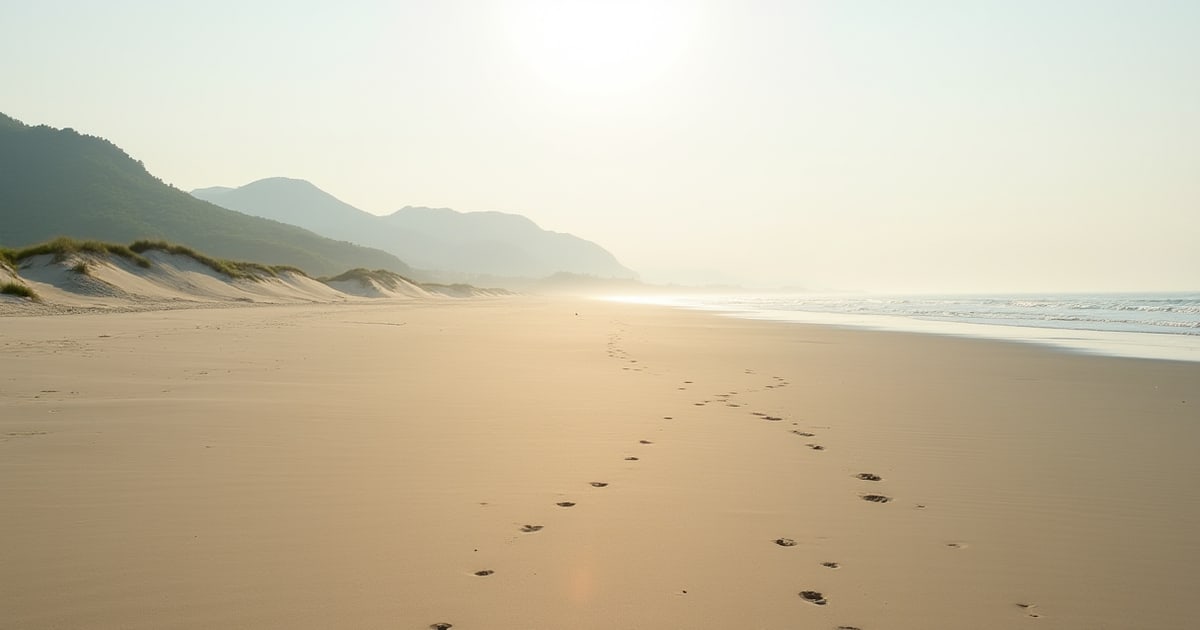
Obzor is what you get when you ask for a Bulgarian beach town that is still an actual town. It sits almost exactly halfway between Varna and Burgas, fronts one of the longest sand beaches on the coast, and keeps a permanent population of around 2,000 people who go to work and school here in January. Asking prices run clearly below Nesebar, and you can fly into either of two airports. It's a strong pick if you want quiet, sand, and a real address. Skip it if you need nightlife, an international school, a hospital within 20 minutes, or a town that stays fully switched on in winter — Obzor drops to a small-village pulse from November to April.
What it's like
Geography does most of the work here. The town sits in a wide bay where the eastern slopes of the Stara Planina range run down to the sea, so you get green hills behind you and a sand strip of roughly 8–10 km in front — from Cape St. Atanas in the north to a wild, dune-backed southern section, with the Blue Flag central beach in between. Even in late July the beach rarely feels packed; there is simply too much of it.
The town itself is compact and walkable: a pedestrian center with restaurants and shops, a leafy town garden where columns from the Roman temple of Jupiter (Templum Iovis) still stand, and rings of 2000s–2010s holiday complexes (Obzor Beach Resort, Sunrise, Galleria and others) spreading along the bay. The Kaleto eco trail climbs 2.2 km from the northwest edge of town past a small waterfall to a medieval fortress site, and ten minutes south is Irakli — one of the last undeveloped beaches on the entire coast. Byala, 5 km north, adds a second layer of small-town services.
Two quirks tell you a lot about local character. In 2021 Obzor held a referendum on splitting from Nesebar Municipality — residents felt their tourism taxes flowed 40 km south — though the result was later invalidated and the town stayed put. And there is an Obzor Hill in Antarctica, named after the town in 2010. People here are attached to the place.
The season — and what winter is really like
The season runs from May to mid-October and peaks in July and August, when the big beach hotels (RIU, Sol Luna Bay and others) are open and the town swells to many times its winter size. May and early June are lovely but the sea is cold; late September is arguably the best month of the year.
Then November arrives and the seasonal restaurants, beach bars and guesthouses close, the complexes empty to a handful of lit windows, and daytime temperatures hover around 0–5°C with a raw wind off the sea. There is no way to dress this up: winter on the Bulgarian coast is gray, and Obzor is no exception.
What saves it — and what separates it from pure resort strips like Sunny Beach — is that roughly 2,000 people actually live here year-round. The supermarkets, pharmacies, bank office, post office, school and kindergarten stay open all winter. You can do a normal Tuesday in February: shop, walk an empty ten-kilometer beach, have coffee where the locals do. Slow, certainly — but functioning. If even that sounds too sleepy, read our honest take on living on the Bulgarian coast before committing — or plan to winter in Varna or Sofia, as many owners do.
Property: buying and renting in 2026
Obzor's market is dominated by holiday complexes built in the 2000s and 2010s, plus older town houses and a thin stream of new construction. Many apartments were originally sold to Russian-speaking buyers who are now mostly sellers — which is exactly where the bargains come from, with big older resale units dipping under €1,000/m2. Across four listing portals checked in August 2026, asking prices span roughly €1,000–1,900/m2, with the mainstream around €1,200–1,500/m2.
| Property type | Typical 2026 asking price | Notes |
|---|---|---|
| Studio (35–45 m2) | €50,000–65,000 | Mostly in serviced holiday complexes |
| 1-bedroom (55–70 m2) | €85,000–115,000 | New-build and sea-view at the top end |
| 2-bedroom (90–120 m2) | €110,000–130,000 | Large older resales go cheaper per m2 |
| Houses | from ~€87,000 | Thin supply; renovated homes €350,000+ |
| Regulated building land | €60–110/m2 | Around town and toward Byala |
For context, Nesebar averages about €1,643/m2 in 2026, with top projects chasing €3,500/m2 — Obzor's mainstream sits comfortably below that, for arguably a better beach. Coastal asking prices have been rising 8–12% a year and 2026 forecasts point to more of the same, so the discount is closing rather than widening.
Budget for running costs before you fall for a pool view: serviced complexes in Obzor charge maintenance fees of roughly €8–15/m2 per year — €720–1,350 annually on a 90 m2 apartment — covering pools, security and common areas, and the invoice arrives even if you never set foot there all year. Ask what the fee actually buys and whether the complex functions at all in winter; some effectively shut down. Our buying property in Bulgaria guide covers the full process, including the land rules for houses.
If you'd rather rent long-term first — the sensible move — be warned that Obzor's long-term market is close to non-existent. The largest national agency listed zero rentals among 33 Obzor properties in August 2026. Your realistic route is negotiating a winter let directly with a complex owner or via monthly holiday-rental rates; expect roughly €250–400/month for a negotiated off-season let, against long-term asks of €450–650/month in Sunny Beach. See renting long-term in Bulgaria for tactics and contracts.
As an investment, coast-wide studies put professionally managed holiday rentals at about 6.7% net on average, up to 8.4% for prime sea-view units — but Obzor's shorter season means you should plan on the low end of that range.
Everyday practicalities
Daily life works, at small-town scale. The compact center has several supermarkets, at least two pharmacies, a DSK Bank presence with ATMs, and a post office — all within a ten-minute walk of everything else.
Education is genuinely unusual for a coastal town this size: the local united school (Sv. Sv. Kiril i Metodiy) runs through grade 10, and there's a municipal kindergarten, Obzorche. Older teenagers commute to Nesebar, Burgas or Varna, and there is no international school anywhere nearby — a dealbreaker for some families.
Healthcare is the honest weak point. Two private GP practices cover the basics and the pharmacies are well stocked, but for anything serious you're driving 65–75 km to hospitals in Varna or Burgas. Factor that in if you need regular specialist care. Beyond housing, costs track small-town Bulgaria — sanity-check your budget with the cost of living calculator.
Getting there and around
Obzor's two-airport position is a real, underrated advantage. Burgas Airport (BOJ) is about 61 km south, Varna Airport (VAR) about 66 km north — both transfers take roughly an hour, so you simply book whichever airport has the better flight that week. Living here, that doubles your options for cheap seasonal routes.
The E87 coastal road runs straight through town, and intercity Varna–Burgas buses stop at the small Obzor bus station, connecting Byala, Sunny Beach, Pomorie and both cities. In summer the service is workable; off-season it thins out badly — some routes drop to a single daily bus. The honest conclusion: you need a car to live here year-round. See driving in Bulgaria for licenses and car import. Sofia is about 440 km away, a solid 4.5–5 hour drive.
Who it suits
Obzor fits buyers who want a quiet beach base at a clear discount to Nesebar and Sveti Vlas, remote workers who prefer empty off-season beaches to bars, and families with younger kids using it May through October. It also suits year-round movers who own a car and genuinely want small-town life — the school, kindergarten and open shops make that realistic here in a way it isn't on the resort strips.
It doesn't fit night owls, anyone dependent on public transport, people who need a hospital nearby, or families with high-schoolers. If you're a non-EU citizen weighing your options, start with the residency wizard — the town won't matter until the permit is sorted.
FAQ
Is Obzor livable year-round?
Yes, with eyes open. Around 2,000 people live here permanently, and the supermarkets, pharmacies, school, kindergarten and bank stay open all winter. But restaurants and hotels largely close from November to April, winters are gray and windy with daytime temperatures around 0–5°C, and you'll want a car. It's small-town living, not resort living.
Which airport should I use — Burgas or Varna?
Either. Burgas (BOJ) is about 61 km away, Varna (VAR) about 66 km, and both transfers take roughly an hour. Book whichever has the better flight — the flexibility is one of Obzor's best perks.
Is Obzor cheaper than Nesebar and Sunny Beach?
Clearly cheaper than Nesebar: mainstream Obzor asking prices are €1,200–1,500/m2 versus Nesebar's ~€1,643/m2 average, with none of the €3,000+ trophy pricing. Against Sunny Beach it's more nuanced — Sunny Beach has cheaper entry-level studios in aging complexes, but Obzor buys you a functioning town instead of a resort strip.
Can I rent long-term in Obzor before buying?
It's hard. There is effectively no advertised long-term rental market — the largest national portal showed zero Obzor rentals in mid-2026. Negotiate a winter let directly with complex owners (roughly €250–400/month), use monthly holiday-rental rates, or base yourself in Varna or Burgas while you search.
Can foreigners buy property in Obzor?
EU citizens can buy apartments, houses and land without restriction. Non-EU citizens can buy apartments freely but need a Bulgarian company to hold land, including a house's yard. Full details in our buying property guide.
Sources
- Wikipedia — Obzor
- CityPopulation.de — Burgas Province, NSI census data
- BulgarianProperties — Obzor town profile
- BulgarianProperties — Obzor listings
- Property.bg — Obzor properties
- BGAdres — Obzor listings
- Bolgarskiy Dom — Obzor
- Rentola — Obzor rental listings
- Welcome.bg — Obzor Beach
- United school Sv. Sv. Kiril i Metodiy, Obzor
Got a question this guide didn't answer? Ask the community — we reply to every question.