Kosharitsa, Bulgaria: The Hillside Village Above Sunny Beach (2026)
Updated August 15, 2026 · 9 min read
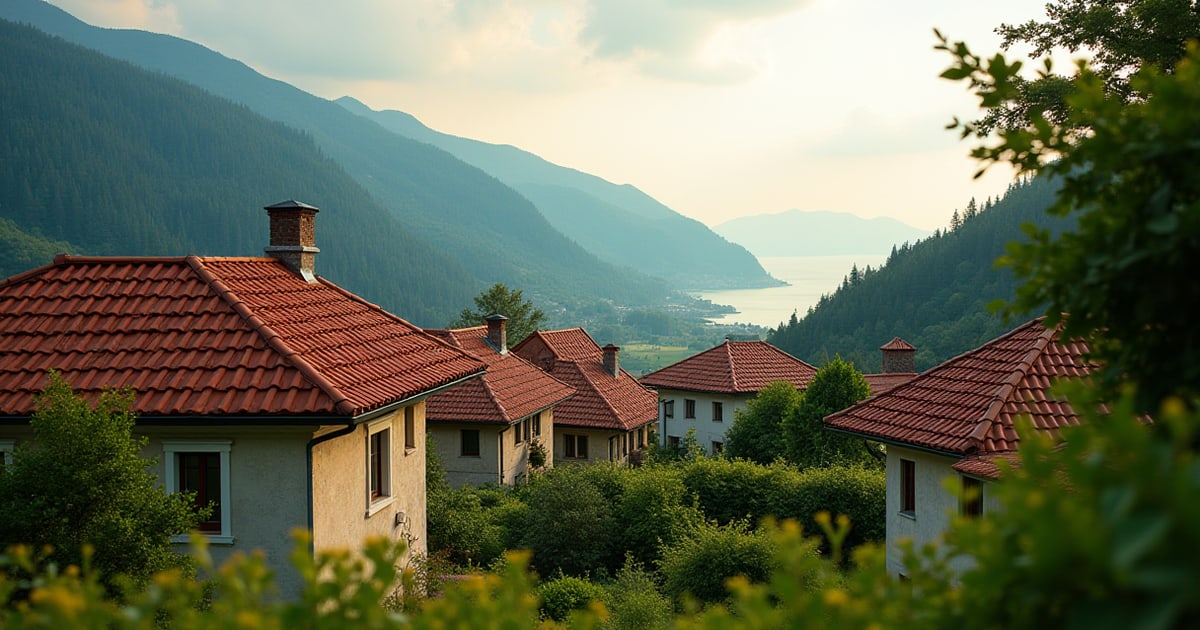
Kosharitsa sits at around 120 meters on the last slopes of the eastern Balkan range, looking down over the entire Nesebar bay — Sunny Beach directly below, old Nesebar on its peninsula, Sveti Vlas across the water. It made its name in the early 2000s as Bulgaria's most famous British buyer colony, and in 2026 it offers one of the coast's clearest trade-offs: far more space, garden, and view per euro than the front-line resorts, in exchange for car-dependent living and a very quiet six months. If you want to walk to the beach — or to anything at all in January — skip it. If you want a real working village with a school, a pharmacy, and pine hills behind the house, ten minutes' drive from the sand, keep reading.
What it's like
Kosharitsa is really two places sharing one name.
The first is an ordinary Bulgarian village: a mayoralty, an Orthodox church, a chitalishte (community center), a couple of grocery stores, a few taverns, a kindergarten, and a primary school. Unusually for rural Bulgaria, it is growing — 1,299 people at the 2021 census, up from 1,219 in 2011, with a 2025 estimate around 1,619, driven partly by registered foreigners. On a coast full of hollowed-out villages, that curve is quietly remarkable.
The second is the ring of holiday development that has spread across the hillsides between the village and Sunny Beach since about 2004. The flagship is Sunset Kosharitsa, a self-contained resort-style complex with six outdoor pools, a gym, sauna, restaurant, mini-market, and 24-hour management, plus a summer shuttle down to the beach. Around it sit Bay View Villas, The Arches, Golden Eye, Cheri Garden, and a dozen smaller developments. In July the hillsides hold several times the village's winter population, and the views — the whole sweep of the bay from Sveti Vlas to Pomorie — are what sold most of these apartments off-plan.
The expat story started with the British. UK press pieces from 2003–2005 covered retired couples selling up in Cornwall and buying brand-new two-bedroom houses here for around £34,000 (roughly €40,000 at the time) — history, not a current price. Some of those pioneers remain, since joined by German, Russian, Israeli, and Irish buyers; realtors report house purchases in the village are still overwhelmingly foreign-driven.
Behind the village, the Balkan ridge rises straight out of the gardens: marked hiking and mountain-biking trails, small fishing reservoirs, and a quad-safari outfit running tours over the hills. Ten kilometers west, the Kalinata protected locality preserves 109 hectares of 200-year-old floodplain forest, protected since 1970 and a habitat of the rare summer snowflake. This is the greenest, most genuinely rural address within sight of Sunny Beach's hotel wall.
The season — and what winter is really like
The coast below runs from roughly mid-May to late September, peaking in July and August. During those months Kosharitsa works beautifully: the municipal bus detours up to the big complexes, Sunset's shuttle runs to the beach, the pools are open, and the restaurants are busy.
Then the charter flights stop, and the honest part of this guide begins. From November to April, Sunny Beach below is effectively a shuttered ghost town with a skeleton crew of supermarkets and a handful of venues. Up the hill, the complexes drain their pools, close their on-site bars and restaurants, and stop the shuttles; whole buildings go dark. Winter guests at Sunset report a fifteen-minute walk downhill to the village just to catch the bus.
The crucial difference from the resort itself: the village core does not die. Because roughly 1,300 people genuinely live here, the shops, pharmacy, GP practice, school, and the bus to Nesebar keep running all winter. If you buy a house on a village street, you will have neighbors in February. If you buy in a hillside complex, you may be one of three lit windows in a 200-apartment development, with no bar, no pool, and a dark walk to the bus stop. Budget for that reality — psychologically as much as financially — before you put money down. Our guide to living on the Bulgarian coast year-round covers the off-season in more depth.
Property: buying and renting (2026)
Kosharitsa is one of the busiest village property markets on the coast: imot.bg alone carried 646 active sale listings in August 2026, with a median asking price of about €977/m² and an average of €1,021/m². That sits just below Sunny Beach's €1,100–1,800/m² resort average — the hill charges no premium; if anything you get more space, greenery, and view for less per square meter.
| Property type | 2026 asking range | Notes |
|---|---|---|
| Studio (26–60 m²) | €29,000–50,000 | Complex resales cluster around €35,000–37,000 |
| 1-bedroom (61–86 m²) | €50,000–95,000 | Sunset resales typically €52,000–60,000 |
| 2-bedroom (83–144 m²) | €78,000–130,000 | Panoramic penthouses at the top of the range |
| Village house (~112–116 m²) | €139,000–170,000 | With garden, on a village street |
| New or luxury house | €250,000–385,000 | Larger builds, some with pools |
| Regulated plot (500–620 m²) | €39,000–90,000 | Build your own |
Two line items buyers routinely underestimate. First, maintenance fees in the gated complexes run €8–10/m² per year — roughly €350–700 annually for a studio to two-bed — due even in years you never make it over. Second, much of the mid-2000s stock is now twenty years old: inspect the roof, joinery, and damp patches before you fall for the view. Village houses carry no fees but bring their own renovation surprises. Read our guide to buying property in Bulgaria as a foreigner before you commit — a house purchase includes its plot, which is no obstacle for EU passport holders, while non-EU buyers usually route the land through a Bulgarian company.
Renting exists, but the long-term market is thin and mostly off-season, when owners let winter-empty complex apartments cheaply. Realistic 2026 figures: €200–300 per month for a one-bedroom, €550–750 per month for a house. That makes Kosharitsa one of the cheapest ways to test the coast — see renting long-term in Bulgaria for the contract mechanics, and spend one full winter as a tenant before committing to a purchase here.
Everyday practicalities
The year-round base is solid for a village this size: two grocery stores, a pharmacy, several taverns, the church, a chitalishte with a library, and a pensioners' club. Bigger shopping means Sunny Beach's supermarkets in season, or Burgas's malls and big-box stores (about 40 km) the rest of the year.
Healthcare: a GP group practice operates in the village itself, with specialists at the Municipal Health House in Nesebar and full hospitals in Burgas, about 45 minutes away; emergencies go through 112. A reasonable setup for healthy adults — but if you need frequent specialist care, the Burgas run will get old fast.
Schools: the village has its own primary school, OU "Sv. Ivan Rilski" (grades 1–7), plus a kindergarten — both taught in Bulgarian. Secondary school means Nesebar or Obzor, and the nearest international-style schooling is in Burgas or Varna, which in practice rules Kosharitsa out for most expat families who want English-language education.
One infrastructure honesty note: the village has asphalt roads, mains sewerage, and decent internet, but the water supply sees occasional summer interruptions in the village and villa zones — an irritant rather than a crisis, though worth asking neighbors about before you buy. For the broader budget picture, see the cost of living in Bulgaria guide.
Getting there and around
Burgas Airport (BOJ) is 34–35 km away — 25 to 40 minutes by car, with private transfers from about €40. There is no direct public transport from the airport: it is a bus to Sunny Beach plus a taxi, or a pre-booked transfer. Varna's airport, roughly 90 km north, is only worth it for a much better flight.
Locally, a municipal bus links Kosharitsa with Sunny Beach and Nesebar. In summer it detours up to the big complexes; in winter it serves only the village center. That is the entire public transport story — which is why the most important practical fact here is that a car is essential. The complexes sit 1–3 km up hill roads from the village center, the beach is 3–7 km away depending on where you are, and every serious errand beyond bread and a pharmacy run goes through Sunny Beach, Nesebar, or Burgas. Factor in driving in Bulgaria — license, car, and the €64.50 annual motorway vignette — as a non-negotiable part of the budget.
Who it suits
Kosharitsa suits buyers who want maximum space and view per euro within ten minutes of the sea and genuinely don't mind driving for everything: early retirees with a car and hobbies, remote workers who prefer hills to beach bars, and nature-minded people who will actually use the trails behind the house. The village-house route gives you real neighbors year-round; the complex route suits summer-heavy users who accept the fees and the winter shutdown with open eyes.
Skip it if you can't or won't drive, if you need walk-to-everything living (look at Ravda or Nesebar instead), if winter social life matters to you, or if you need English-language schooling. The closest comparison is fellow hill village Banya, near Obzor — smaller, cheaper, and quieter still. And if you are weighing the paperwork side of a move, the residency wizard will point you to the right permit route.
FAQ
How far is Kosharitsa from the beach?
Between 3 and 7 km: the village edge is 3–4 km from the western end of Sunny Beach, while the upper complexes such as Sunset Kosharitsa are 6–7 km from the sand by road. There is no beach in the village itself — count on a 10–15 minute drive.
What are the maintenance fees in the gated complexes?
€8–10/m² per year across the main complexes (Golden Eye at the lower end, Sunset and The Arches at 9–10). For a typical studio to two-bedroom apartment, that is roughly €350–700 a year, payable regardless of how much you use the place.
Can you live in Kosharitsa year-round without a car?
In the village core, just barely — shops, pharmacy, GP, school, and the winter bus to Sunny Beach and Nesebar are all within walking distance. In the hillside complexes, realistically no: the winter bus doesn't come up, the on-site shops and bars close, and you are a 15-minute-plus walk from everything, uphill on the way home.
Is Kosharitsa still a British village?
It is more mixed now. The British colony of the early 2000s left a lasting mark and some pioneers remain, but today's buyers and residents also include Germans, Russians, Israelis, and Irish, alongside a growing Bulgarian permanent population.
Is Kosharitsa a good buy-to-let investment?
Treat it as a lifestyle purchase first. The short-term season below is effectively 8–10 weeks, long-term rents are modest (€200–300 for a one-bedroom), and resale supply is plentiful — 646 listings on one portal alone in mid-2026. Buy for the space and the view, and treat any rental income as a bonus.
Sources
- imot.bg — Kosharitsa sale listings
- BulgarianProperties — Kosharitsa area profile and listings
- Tranio — apartments for sale in Kosharitsa
- City Population — Nesebar municipality census data (NSI)
- Sunset Kosharitsa — official complex site
- Burgas Airport Taxis — Kosharitsa transfers
- OU "Sv. Ivan Rilski" — Kosharitsa primary school
- Opoznai.bg — Kalinata protected locality
- TripAdvisor — What's Sunny Beach like in winter (forum thread)
Got a question this guide didn't answer? Ask the community — we reply to every question.