Living in Ruse: Bulgaria's Danube 'Little Vienna'
Updated August 14, 2026 · 8 min read
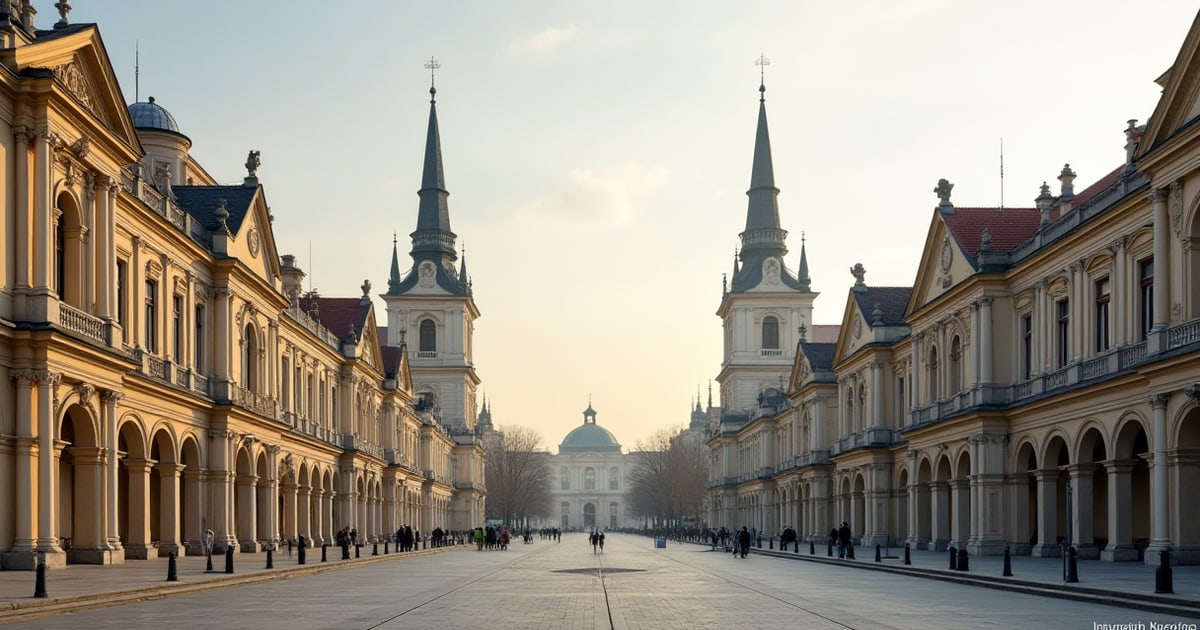
Ruse is the city Bulgarians tell you is underrated, and for once the cliche checks out. Spread along the Danube's south bank, Bulgaria's fifth city (around 125,000 people) grew rich on river trade in the late 1800s and spent the money on architecture: Viennese Secession facades, the grand Dohodno Zdanie theater building, and a monumental central square that looks airlifted from the Austro-Hungarian empire. Locals have called it "Little Vienna" for a century.
For foreigners, Ruse's 2026 pitch is a strange and compelling arbitrage: the lowest living costs of any sizable Bulgarian city — a central one-bed around €350 — combined with a major international airport just across the river. Bucharest's Otopeni hub is roughly an hour and a quarter away, and since Bulgaria and Romania both joined full Schengen, the Danube bridge crossing has no passport queue at all. The catch: the smallest expat scene in this series and a city still figuring out its post-industrial identity. Start with the national picture in moving to Bulgaria, then weigh the honest specifics below.
Who Lives Here
Ruse is the least "expat" city in this series, which cuts both ways. The foreign community numbers in the low hundreds: a scattering of British and German retirees drawn by prices and the river, Romanian cross-border commuters and business owners (Bucharest is closer to Ruse than to half of Romania), Erasmus and medical students at the University of Ruse, and a small but growing handful of remote workers who did the airport math. Locals are the city's soul — an educated, opera-going, slightly melancholy population proud of the architecture and frank about the decades of decline that followed communism, when the city shrank from 180,000-plus to today's numbers.
If you want a ready-made international bubble, it is not here. If you want to live in Bulgaria among Bulgarians, at 1990s prices with 2026 infrastructure, keep reading.
The Neighborhoods That Matter
The Center
The reason to come: pedestrianized Aleksandrovska street, Liberty Square under the Monument of Freedom, Secession facades in various states of restoration, the opera, and cafes with Vienna prices divided by four. Living centrally is affordable even on the main streets — a renovated one-bed in the €350-450 range — and everything worth doing is a ten-minute walk.
Vazrazhdane
The belt of streets around the center's western side, mixing old houses and mid-rise blocks. Central convenience at a discount, popular with university staff and young families. Some streets are beautifully kept, others crumbling — walk before you sign.
Zdravets
The big eastern residential district: panel and brick blocks, markets, parks, schools. Ruse's practical middle — renovated two-beds around €300-400 — with frequent buses running the ten minutes to the center.
Druzhba
Southwestern district near the university's newer facilities: ordinary blocks, green courtyards, and some of the cheapest livable housing in urban Bulgaria. Student-flavored around the edges.
Charodeyka
The farthest big panel district, and the cheapest: functional, well-served by transport, aesthetically socialist. Where a couple's entire rent can dip below €250 — and where you will hear no English at all.
Nikolovo and the villages (10-15 km)
House-and-garden territory in the low hills east of the city, around the Lipnik forest park and its lake. A modest expat and wealthy-local colony lives here; the trade is standard rural Bulgaria — space and quiet for car dependence.
Cost Snapshot (late 2026)
| Item | Price (monthly) |
|---|---|
| 1-bed apartment, city center | €320–420 |
| 1-bed apartment, outside center | €250–320 |
| Family 3-bed, good district | €450–600 |
| Utilities, 85 m2 apartment | €85–110 |
| Public transport pass | ~€15 |
| Couple, total comfortable budget | €1,100–1,400 |
Wise's 2026 data averages a central one-bed near €350 and a single person's non-rent costs around €585; current listings show furnished studios from €290 and central two-beds around €600. These are the lowest city figures in Bulgaria — meaningfully below Plovdiv, let alone the coast. A couple with €1,400 a month lives genuinely well: opera subscriptions, weekly restaurants, a car. Compare nationally in the cost of living guide and run your own scenario in the cost of living calculator.
Work and Internet
The local economy — river port, logistics, manufacturing, agriculture processing, a growing Romanian-investment layer — offers little direct employment for non-Bulgarian speakers beyond the university and occasional plant-management roles. The realistic residents are the usual three: remote workers, pensioners, and business owners serving cross-border trade. Bulgaria's 10% flat tax applies as everywhere; open your accounts early (opening a bank account in Bulgaria explains the process and quirks).
Digital infrastructure is the standard national surprise: fiber at €10-15 a month, full-speed mobile data, and enough laptop-friendly cafes to work centrally, though coworking as an institution barely exists yet. For remote workers the honest summary: the internet is Sofia-grade; the community is not.
Getting Around
Ruse is flat — a rarity among Bulgarian cities — and compact, so walking and cycling cover most of life; the EuroVelo 6 Danube route runs through town, and the riverside lends itself to long flat rides. Buses and trolleybuses are cheap and adequate; taxis are plentiful.
The intercity story is Ruse's trump card and its complaint rolled together. Trump card: Bucharest — its airport is one of Eastern Europe's biggest hubs, about 75 minutes' drive with zero border formalities since full Schengen, opening a flight map Sofia cannot match (what changed with Schengen and the euro in 2026 covers this shift). Trains also cross to Bucharest daily. Complaint: the rest of Bulgaria is far — Sofia is 300 km (about 3 hours by car, more by train), Varna 200 km. Most residents keep a car; see driving in Bulgaria, and note the bridge toll queue in summer beach traffic.
Healthcare and Schools
Regional-city tier: a large regional hospital, university medical faculty, private clinics and diagnostics centers where a specialist visit costs €20-40 and waits are short. Adequate for routine and moderate needs; complex cases go to Sofia or Varna — or, a local twist, privately to Bucharest, which is closer than either. Sort your coverage through the healthcare and insurance guide.
Schools are Bulgarian public and private, with respected mathematics and English-language high schools but no international curriculum. The nearest IB schools are in Bucharest — commutable in theory, boarding-or-move in practice. Families with secondary-age children needing English education should weigh this hard.
Social Life and the Expat Scene
Ruse's cultural infrastructure embarrasses cities twice its size: a proper opera house and philharmonic (tickets from a few euros), the March Music Days international festival, theaters, and a cafe promenade culture on Aleksandrovska that fills every evening the weather allows. The riverside quay hosts summer concerts and slow Danube sunsets. What it lacks is international social scaffolding — no expat institutions, one small informal foreigners' network, events found through Bulgarian-language channels or not at all. Newcomers who thrive here either speak some Bulgarian within a year, plug into the university's international circle, or treat Bucharest (an hour away, remember) as their big-city social supplement. Weekend hinterland is a quiet strength: the rock-hewn churches of Ivanovo (UNESCO), Basarbovo monastery, Cherven fortress, and the Rusenski Lom canyons are all within 40 minutes.
The Honest Downsides
The expat scene is nearly nonexistent — this is immersion, chosen or not, and without some Bulgarian (or Russian, still widely understood by the older generation) daily admin is harder than in Sofia or the coast. The city is shrinking: emigration hollowed it for decades, and outside the restored core you will see empty industrial land and tired blocks. Air quality has episodes — an industrial legacy on both banks means occasional odor complaints, a sensitive local topic since the 1980s, though normal days are fine and the wind does most of the cleaning. Summers are hot (38°C happens) with riverside mosquitoes; winters are cold and foggy on the Danube plain. And the rest of Bulgaria is far — pick Ruse and you are choosing the Bucharest orbit over the Sofia one.
Verdict: Who Should (and Shouldn't) Pick Ruse
Pick Ruse if you want the cheapest genuinely urban life in Bulgaria — opera, architecture, river promenades — backed by a world-class airport an hour away, and you see a small international scene as a feature or a challenge rather than a flaw. Retirees with location-free income and travel habits are the textbook fit — see retiring in Bulgaria for the wider picture, and if the prices tempt you toward ownership, read buying property in Bulgaria first: the center's fixer-uppers are seductive and complicated.
Skip Ruse if you need an English-speaking bubble, international schools, or Bulgaria's other attractions on your doorstep — the mountains and the sea are both three hours away. For the same low-cost, high-history formula with more foreigners around, Veliko Tarnovo is 90 minutes south.
FAQ
Is the Bucharest airport advantage real?
Yes — it is the best flight access of any cheap Bulgarian city. Roughly 75 minutes door to terminal with no border stop, taxi transfers around €50-70, shared shuttles less, plus daily trains. Ruse residents fly places Sofia residents connect to.
Can I get by in English?
Less than anywhere else in this series. Young people, the university circle, and better restaurants manage; bureaucracy, landlords, and tradespeople mostly do not. Budget for a translator on admin days and start learning basics — the payoff curve here is steep.
Why is Ruse so cheap?
Decades of population decline left housing supply loose, and no tourist or expat wave has repriced it — yet. You are buying into a city before the arbitrage closes rather than after; whether that gap closes or persists is the honest unknown.
What is the air quality situation?
Most days are fine, and the riverside setting helps. The city's industrial legacy (and Giurgiu's, across the river) produces occasional odor episodes that locals monitor vocally. If you are highly sensitive, visit for a couple of weeks across seasons before committing.
Sources
Got a question this guide didn't answer? Ask the community — we reply to every question.